
01 · START WITH THE APPLICATION
Five inputs determine the right filler metal.
A classification alone does not describe the complete welding requirement. Before comparing price, establish the technical boundary of the application. That prevents a quotation from being built around an incomplete or unsuitable product description.
02 · GRADE COMPARISON
Common aluminum welding wire grades at a glance.
The table is a procurement starting point—not a welding procedure specification. Compatibility and mechanical requirements must be confirmed for the actual joint.
| Grade | Filler family | Typical base-material direction | Common purchasing context |
|---|---|---|---|
| ER1100 | Commercially pure aluminum | 1xxx-series and selected pure-aluminum work | Conductivity and corrosion-focused fabrication |
| ER4043 | Al-Si5 | Compatible 6xxx-series and cast aluminum | General fabrication and cast-to-wrought applications |
| ER4047 | Al-Si12 | Compatible Al-Si assemblies | Selected welding and brazing with higher fluidity |
| ER5087 | Al-Mg-Mn-Zr | High-strength 5xxx-series | Marine, rail and engineered structures |
| ER5183 | Al-Mg-Mn | 5083 and compatible Al-Mg alloys | Marine, tanks and high-strength fabrication |
| ER5356 | Al-Mg5 | Many 5xxx and compatible 6xxx alloys | Marine, transport and general aluminum fabrication |
03 · THE COMMON COMPARISON
ER4043 vs ER5356: how buyers should frame the decision.
Aluminum-silicon direction
Often considered for compatible 6xxx-series and cast-aluminum applications where fluidity and reduced hot-cracking sensitivity are priorities.
View ER4043 →Aluminum-magnesium direction
Often considered for compatible 5xxx/6xxx fabrication where strength, marine exposure or anodized color matching influences the choice.
View ER5356 →Selection noteDo not substitute ER4043 and ER5356 based on price alone. Base-alloy compatibility, service temperature, required properties and the qualified welding procedure should control the decision.
04 · PROCESS & SUPPLY FORM
Match the package to the welding process.
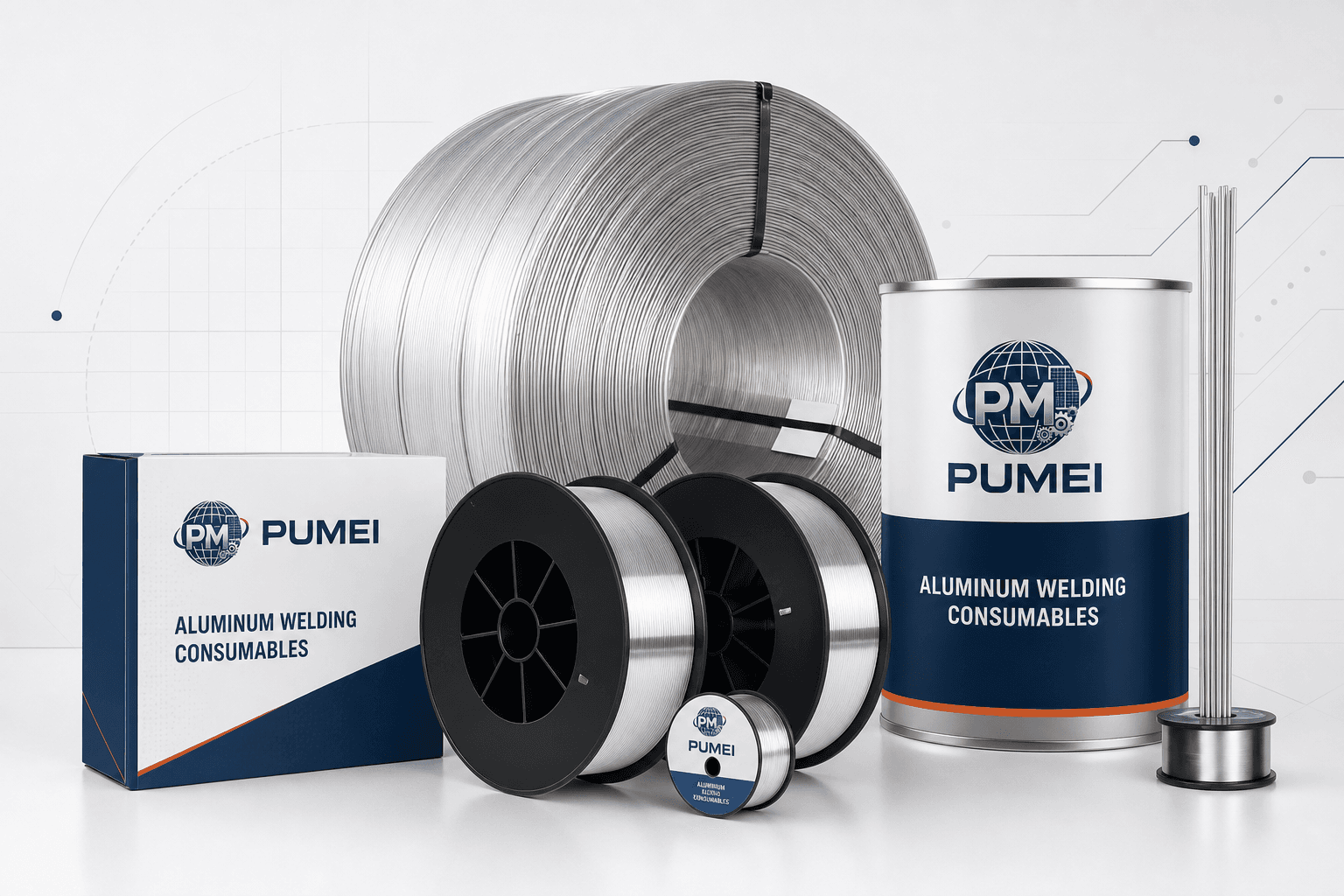
Layer-wound spool wire
Confirm wire diameter, spool dimensions, spool weight, hub format and equipment compatibility.
Straight filler rods
Confirm rod diameter, cut length, packaging quantity and the cleanliness requirements for storage.
05 · PROCUREMENT CHECKLIST
What to include in an aluminum welding wire RFQ.

A useful quotation starts with a complete requirement.
Frank Xu supports overseas buyers with grade confirmation, packaging coordination and export communication.
Discuss your product list →06 · FAQ
Questions buyers ask before ordering.
What is the main difference between ER4043 and ER5356?+
ER4043 is an aluminum-silicon filler often used for compatible 6xxx-series and cast aluminum. ER5356 is an aluminum-magnesium filler often selected where higher strength, marine service or anodized color matching matters.
Can one aluminum welding wire cover every base alloy?+
No. Base-metal chemistry, strength, cracking sensitivity, corrosion exposure, service temperature and finishing requirements can change the correct filler choice.
Should I order MIG wire or TIG rods?+
Choose the supply form for the welding process and equipment. MIG normally uses layer-wound spool wire; TIG normally uses straight filler rods.
What information should an aluminum welding wire RFQ include?+
Include base alloy, process, classification, diameter, package, quantity, standard, application, destination and private-label requirements.